
Context
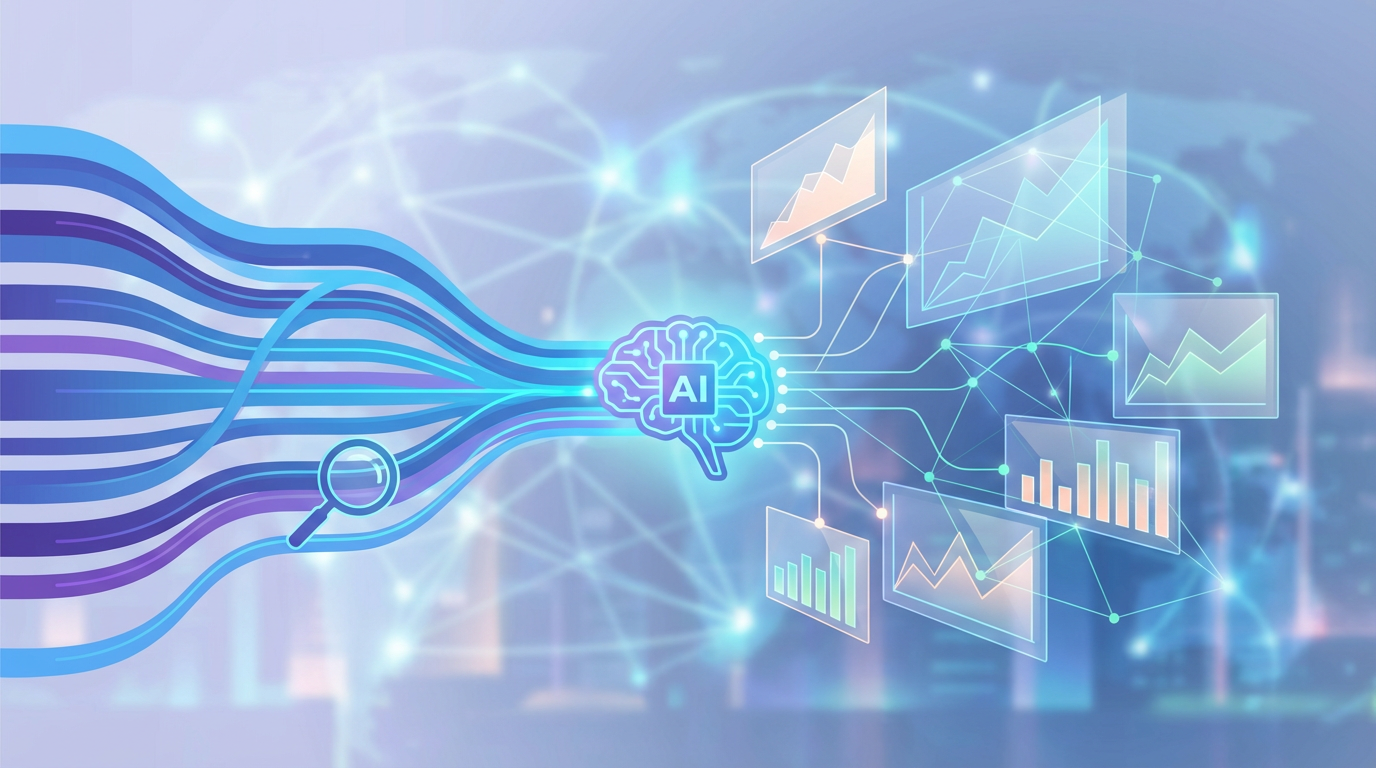
In a context where quick and reliable understanding of a market is essential for decision-making, generative AI is changing how companies conduct their market analyses. This use case presents an automated agent, deployed in the industrial sector, capable of producing customized, data-driven and illustrated market studies for any business request.
Challenges
- Save time: automate the collection, verification and reporting of market information.
- Improve data reliability: ensure traceability and verification of data used, systematically citing sources.
- Adapt the analysis: respond precisely to each business need (product, geography, segment, competitors, etc.).
- Spread knowledge: enable rapid distribution of reliable analyses to all decision-makers and staff.
Solution
How the market analysis agent works
- Requirement gathering — The agent questions the user to frame the request: geographic scope, product, time horizon, competitors to include, etc.
- Automated data collection — The AI leverages internet search engines and sector databases to aggregate: market figures, competitive information, customer feedback, regulations.
- Structured and visualized analysis — The AI applies a robust analytical framework: SWOT, quantified summaries, visualizations, multi-territory comparisons, strategic recommendations.
- Professional report generation — Clear structure: introduction, key figures, competitive analysis, recommendations.
- Custom export — PDF (reading, sharing) or DOCX (editing, collaborative enrichment).
Results
- Time savings: reduction from several days to a few minutes to produce a complete market study.
- Increased reliability: each data point is sourced and its confidence level is indicated.
- Easy distribution: reports are ready-to-use for management, commercial directors or innovation teams.
- Adaptability: the agent adjusts to any type of business request, from global overview to ultra-targeted analysis.
Perspectives
- Industrialization: creation of a "study factory" for all departments (marketing, innovation, regulatory…).
- Personalization: progressive enrichment of sources and analysis models for each sector.
- Integration: possible coupling with other IS tools (CRM, ERP, collaborative platforms).