
Generative AI news for the enterprise
Insights, articles and newsletters on generative AI

AI is profoundly transforming how companies design and use their tools. IT departments must secure usage without blocking experimentation and business initiative. Managers play a vital role by leading by example and linking AI to the real needs of teams. Success relies on a balance between autonomy, governance, skills, and trust. AI will only be truly useful if it remains aligned with human and organizational priorities.

Discover how AI governance tools enable control over risks, costs, compliance, and value creation. excerpt: "The rise of generative AI is forcing companies to implement adapted governance. Dashboards, observability, risk management, compliance, and value measurement are becoming essential to move from experimentation to strategic management.
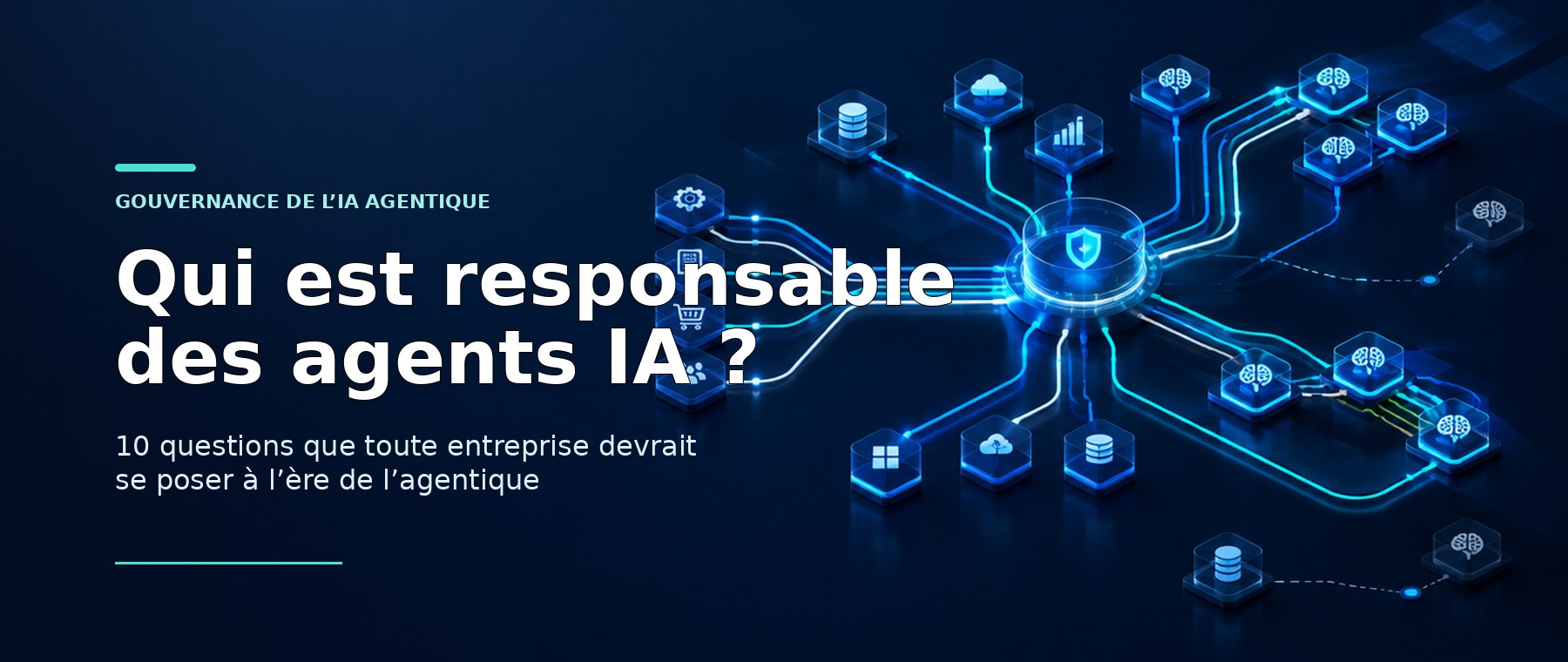
The rise of AI agents marks a new stage in the digital transformation of businesses. Following conversational assistants, organizations are seeing the emergence of agents capable of acting, automating processes, interacting with applications, and making certain decisions. But a critical question emerges: who is responsible for these agents? The article explains that the real challenge is no longer creating AI agents, but governing them. According to Deloitte's State of AI in the Enterprise 2026 study, only 21% of organizations claim to have a mature governance model for AI agents, even as their adoption accelerates sharply. To avoid risks, every company should ask ten fundamental questions: Who is responsible for an agent when it makes a mistake? How can the proliferation of redundant agents be avoided? How should agent ownership be managed when its creator leaves the company? How can hundreds or even thousands of agents be administered? How can their access to sensitive data be controlled? How can their real value and contribution to performance be measured? How can their regulatory compliance be guaranteed? How should their level of autonomy be supervised? How can they be integrated into existing business processes? How can it be ensured that their operation reflects the company's values?

How AI can reduce repetitive tasks, strengthen skills, and put humans back at the heart of value creation. Contrary to popular belief, artificial intelligence can help return humans to the center of their profession. Provided it is deployed as a lever for autonomy, skills, and value creation.
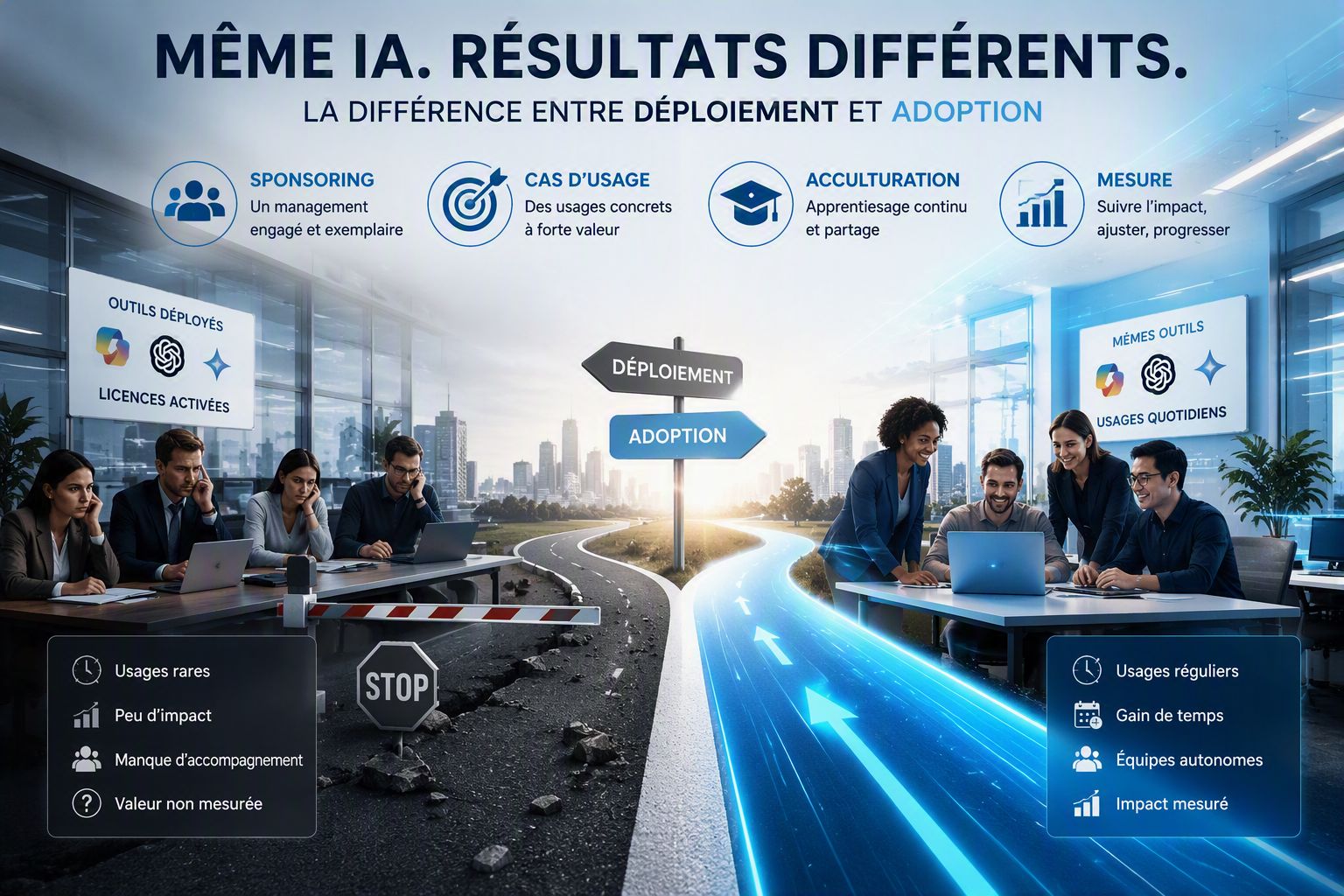
Understand why some teams quickly create value with AI through 4 key factors: sponsorship, use cases, acculturation, and measurement. Deploying an AI is not enough. Discover the four levers that explain why some teams save several hours per week while others observe almost no impact.
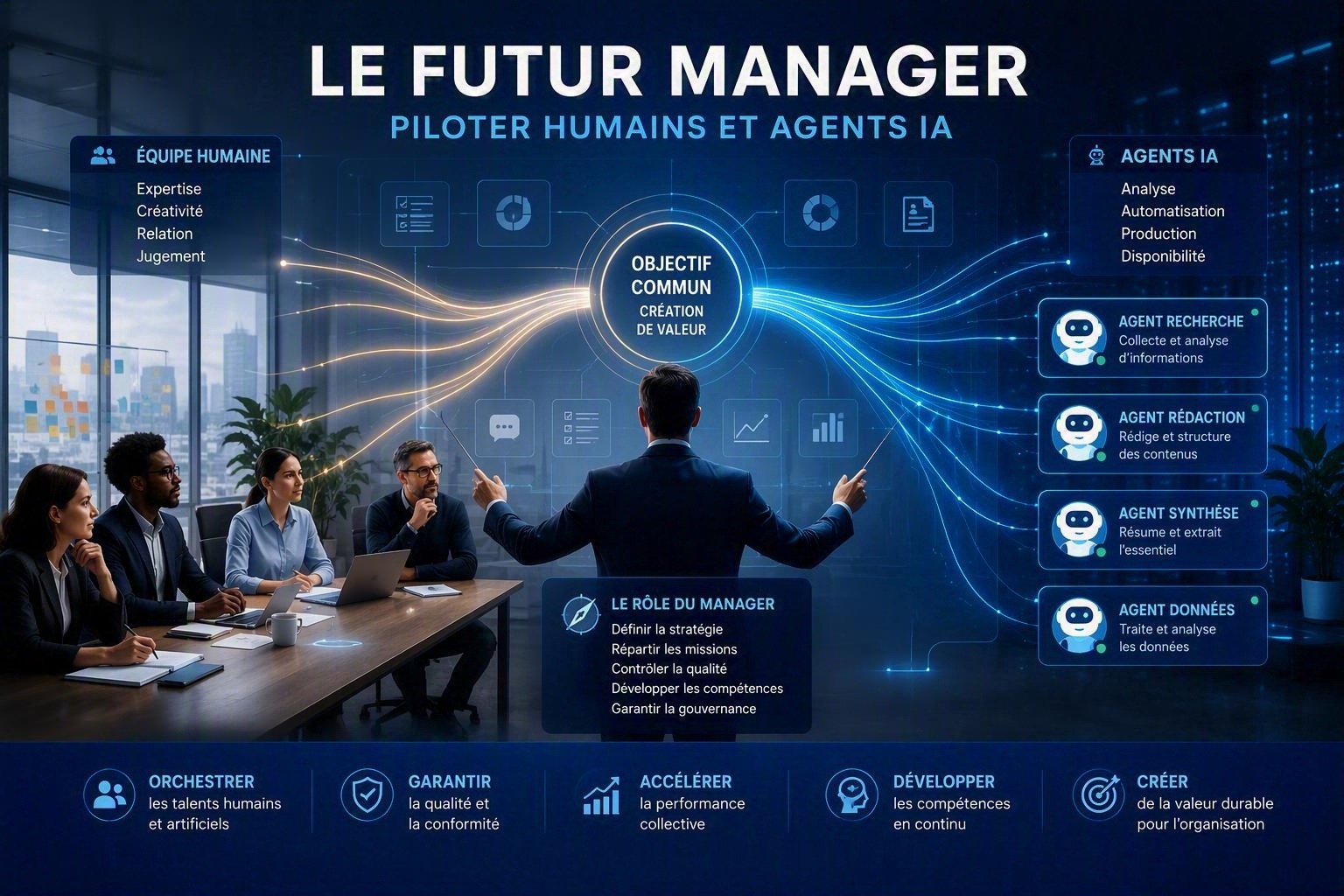
This article defends a simple but often misunderstood idea: AI does not replace management; it transforms it. As companies deploy Microsoft Copilot, ChatGPT Enterprise, Gemini, or specialized AI agents, the manager's role is evolving. It is no longer just about coordinating people, but about effectively orchestrating interactions between employees, tools, and intelligent agents. The challenge is not technological. The challenge is organizational, human, and strategic. For executives, HRDs, and transformation leaders, the question therefore becomes: how do we prepare managers to work in hybrid teams where humans and AI agents collaborate on a daily basis?
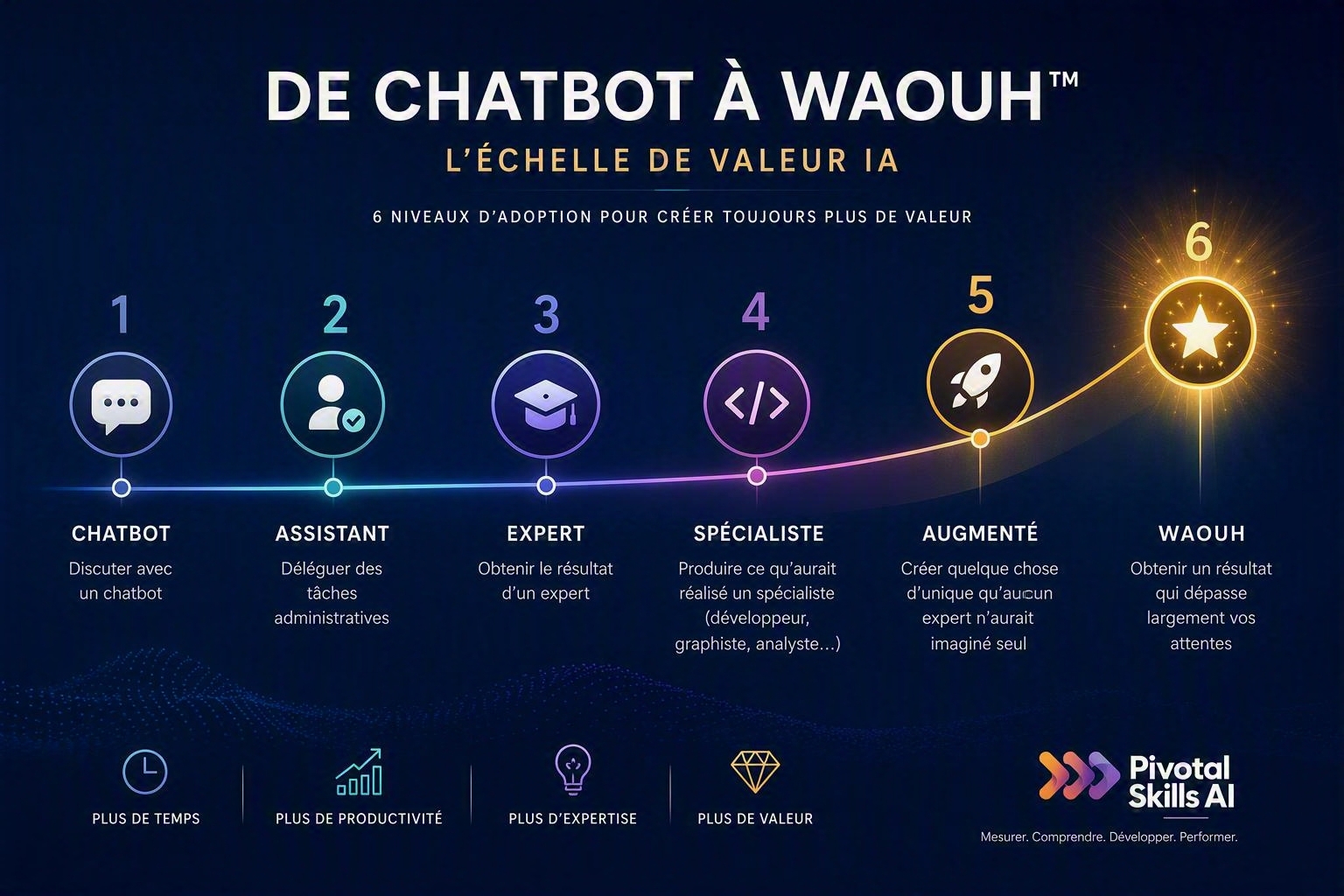
During a recent conversation with an executive, one simple reflection struck me. For him, AI adoption is not measured by the number of ChatGPT or Copilot licenses deployed. It is measured by the maturity level of its use cases. ➡️ Level 1: Chatting with a chatbot. ➡️ Level 2: Delegating administrative tasks to an assistant. ➡️ Level 3: Obtaining the output of an expert. ➡️ Level 4: Producing what a specialist (developer, graphic designer, analyst...) would have created. ➡️ Level 5: Creating something unique that no expert could have imagined alone. And perhaps an ultimate level: the famous "Wow" effect. That moment when AI produces a result that far exceeds what you hoped to achieve. The real question, then, is perhaps not "are we using AI?" but rather: At what level of adoption are we really?

This edition explores 15 key signals shaping agentic AI, open models, adoption and governance. A practical briefing for understanding what is already changing in enterprise workflows and identifying the next concrete actions to take.
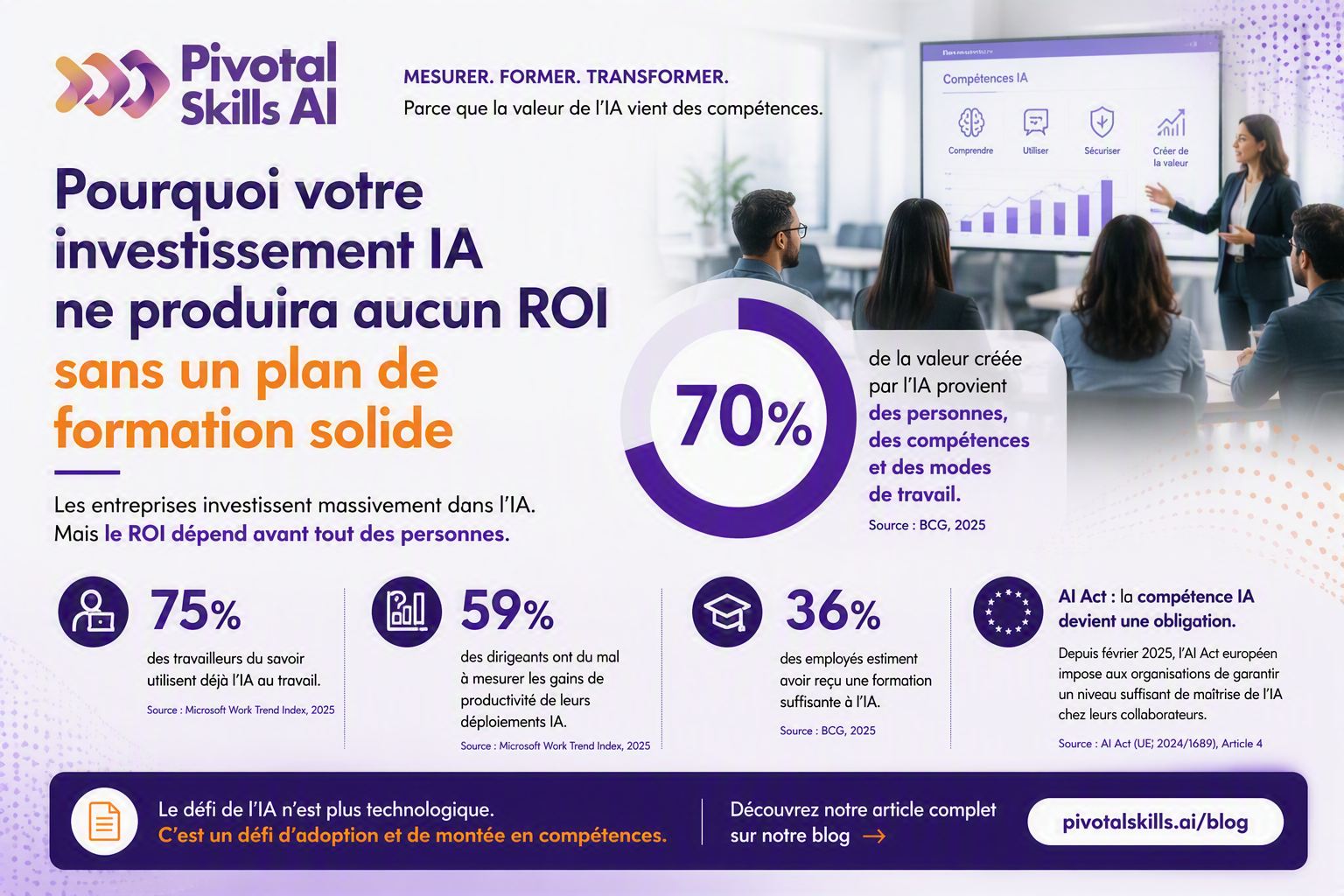
You are investing in AI. But are you actually getting any ROI? While companies are multiplying deployments of Copilot, ChatGPT Enterprise, and AI agents, value creation often remains difficult to demonstrate. Why? Because technology is only one part of the equation. According to BCG, 70% of the value created by AI comes from people, skills, and ways of working, while Microsoft finds that 59% of leaders still struggle to measure the ROI of their AI investments. The real challenge is no longer technological. It is human. ➡️ How do you measure AI skills? ➡️ How do you identify priority populations? ➡️ How do you transform adoption into measurable value? Read our full analysis on the Pivotal Skills AI blog.
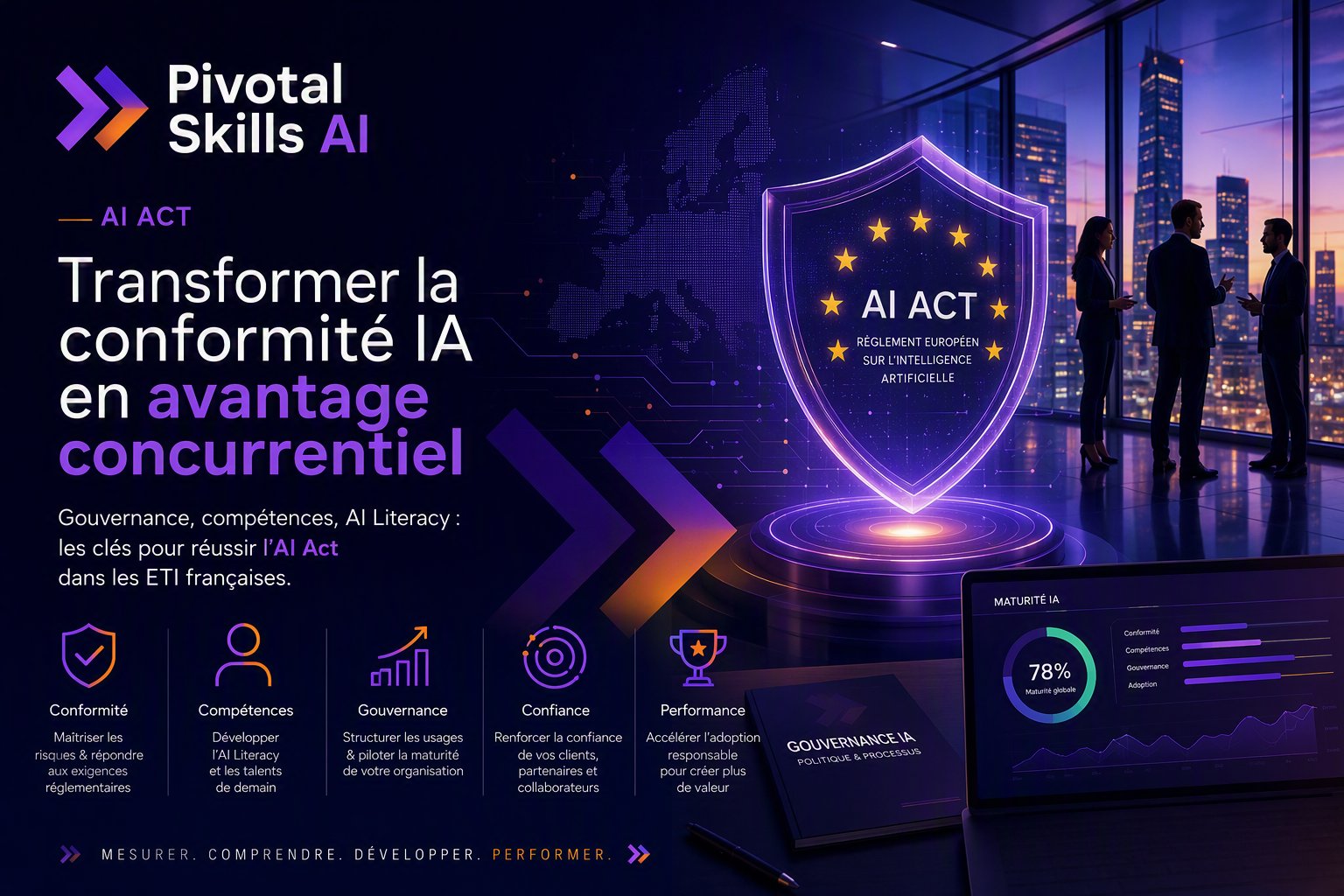
Find out how the AI Act is transforming the use of artificial intelligence in French mid-caps (ETIs). Obligations, AI Literacy, governance, timeline, penalties, and best practices for turning compliance into a competitive advantage.

This monthly edition covers the period when AI transitioned from being a tool to becoming an actor. Agents are now making payments (Visa, Mastercard), executing code (Dust The Computer), and replacing freelance tasks (Remote Labor Index). Meanwhile, Anthropic is filing its S-1 for a $965B IPO, Claude Sonnet 5 is redefining the enterprise standard, and the AI Act comes into force in 33 days. 20 signals selected and analyzed by Pivotal Skills AI — categorized, contextualized, and actionable as of Monday morning.
Our Pivotal Skills AI newsletter on the most relevant generative AI news from May for businesses.